
Choosing a diamond is about more than just carat weight. The way a diamond is cut has one of the biggest impacts on its brilliance, fire and overall beauty. Whether you’re shopping for an engagement ring, anniversary gift or custom jewelry, understanding the different types of diamond cuts can help you make a confident purchase.In this guide, we’ll explain what a diamond cut is, how it differs from diamond shape, compare the 10 most popular diamond cuts, and help you determine which style best fits your taste and budget.
Visit Sandler’s Diamonds & Time in Mount Pleasant, SC, to compare a wide selection of diamond cuts in person. Our knowledgeable team can help you understand the differences between each cut and choose the diamond that best fits your style, budget and lifestyle.
A diamond cut refers to how a diamond has been proportioned, faceted and polished after it is mined. It’is one of the 4 Cs of diamond quality, along with carat, color and clarity. Of these 4 C’s, cut is often considered the most important because it determines how well a diamond reflects light.
A well-cut diamond appears brighter, more brilliant and more lively than a poorly cut diamond, even if both have the same color and clarity grades.
A quality cut influences:
Even a large diamond can appear dull if it isn’t cut properly, while a smaller diamond with an exceptional cut can appear more vibrant.
One of the most common misconceptions is that a diamond’s cut and shape are the same thing. They’re closely related but describe two different characteristics.
| Diamond Cut | Diamond Shape |
|
|
For example, an oval diamond describes the diamond’s shape, while the quality of its cut determines how brilliantly it reflects light and sparkles.
| Diamond Cut | Sparkle | Shape | Best For | Price |
| Round Brilliant | ★★★★★ | Round | Maximum brilliance | $$$$ |
| Princess | ★★★★☆ | Square | Modern styles | $$$ |
| Cushion | ★★★★☆ | Square with rounded corners | Vintage-inspired | $$$ |
| Oval | ★★★★★ | Oval | Elongating fingers | $$$$ |
| Emerald | ★★★☆☆ | Rectangle | Elegant clarity | $$$ |
| Radiant | ★★★★★ | Rectangle | Maximum sparkle | $$$ |
| Asscher | ★★★☆☆ | Square | Art Deco style | $$$ |
| Pear | ★★★★☆ | Teardrop | Unique engagement rings | $$$ |
| Marquise | ★★★★☆ | Boat | Larger appearance | $$$ |
| Heart | ★★★★☆ | Heart | Romantic designs | $$$ |
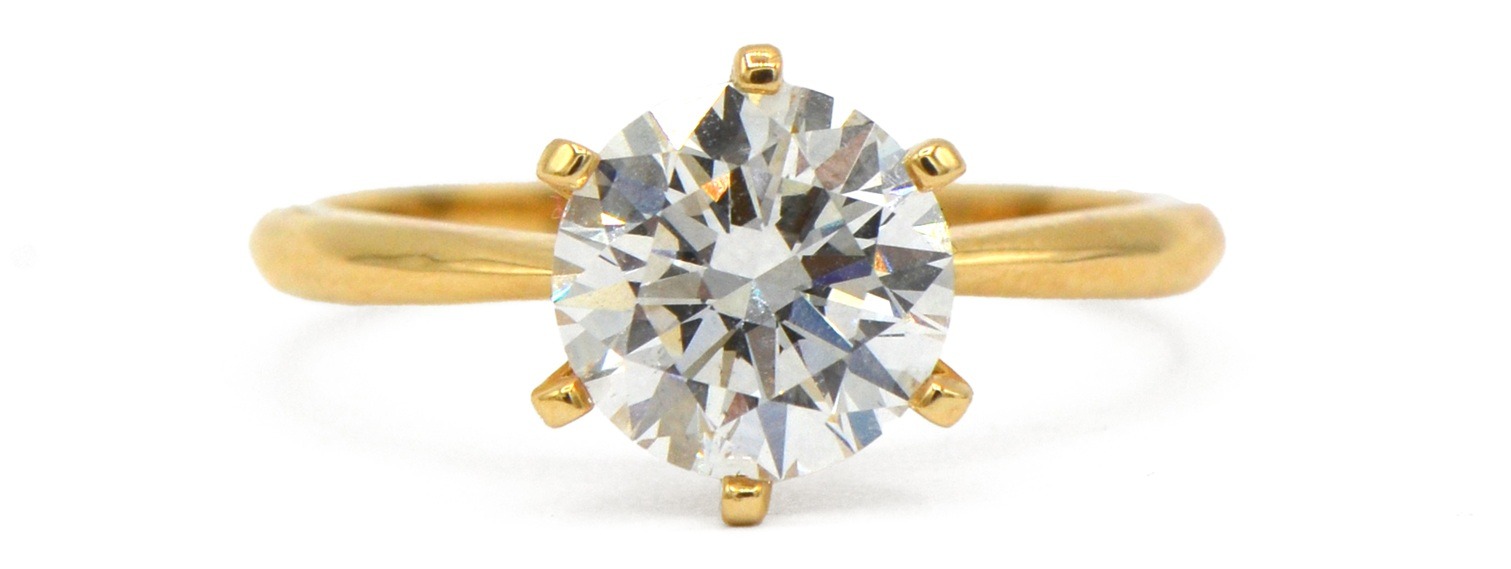
The round brilliant cut is the world’s most popular diamond cut. It’s designed for maximum sparkle with 57 or 58 precisely arranged facets.
Pros
Cons
Best Settings
Solitaire, halo, pavé and three-stone engagement rings.
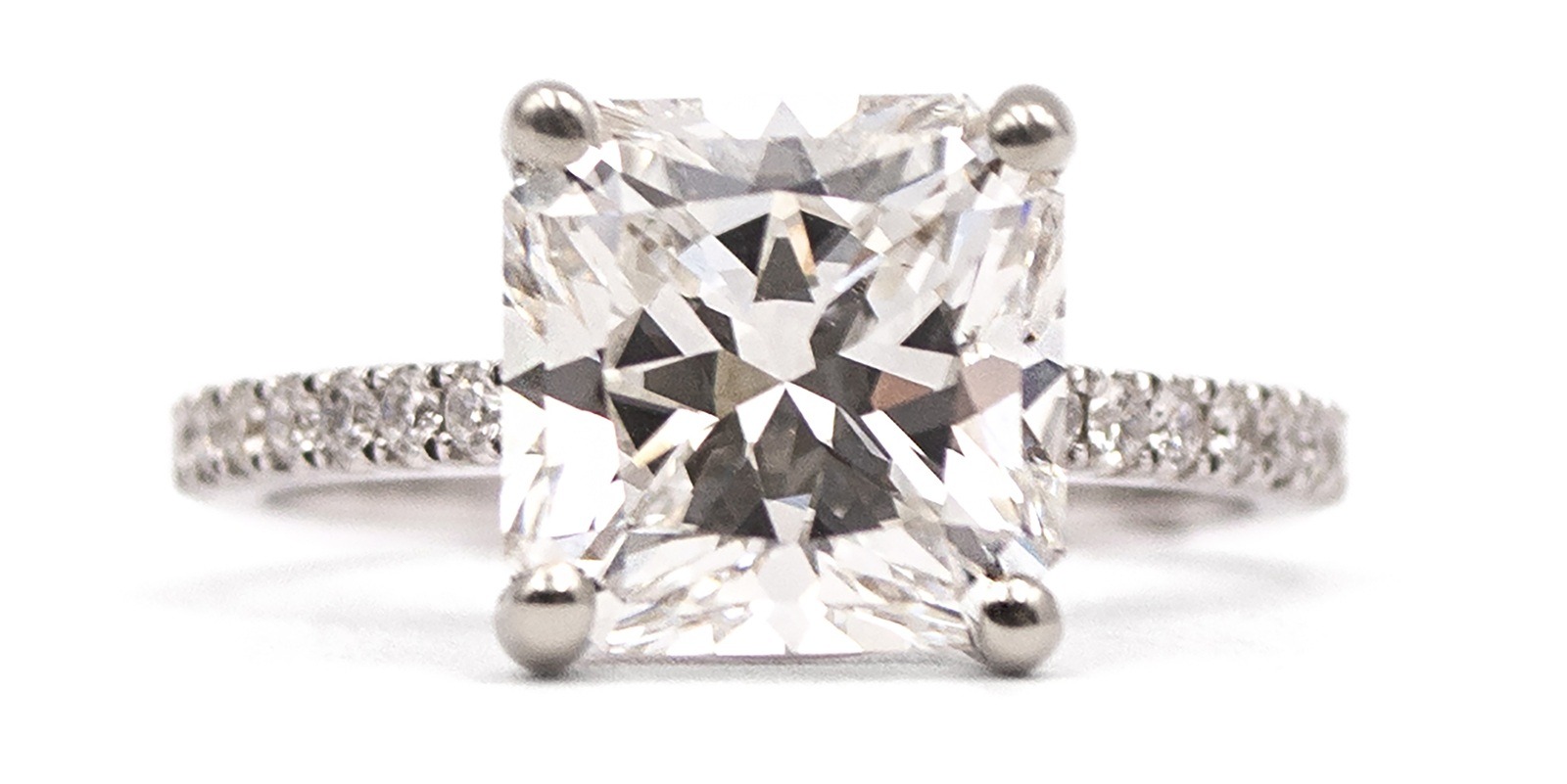
The princess cut is a square-shaped diamond with clean lines and brilliant faceting. It offers a contemporary look while delivering impressive sparkle and is one of the most popular choices for engagement rings.
Pros
Cons
Best Settings
Four-prong solitaire, halo, channel-set bands, V-prong settings
Shop Princess Cut Diamond Rings
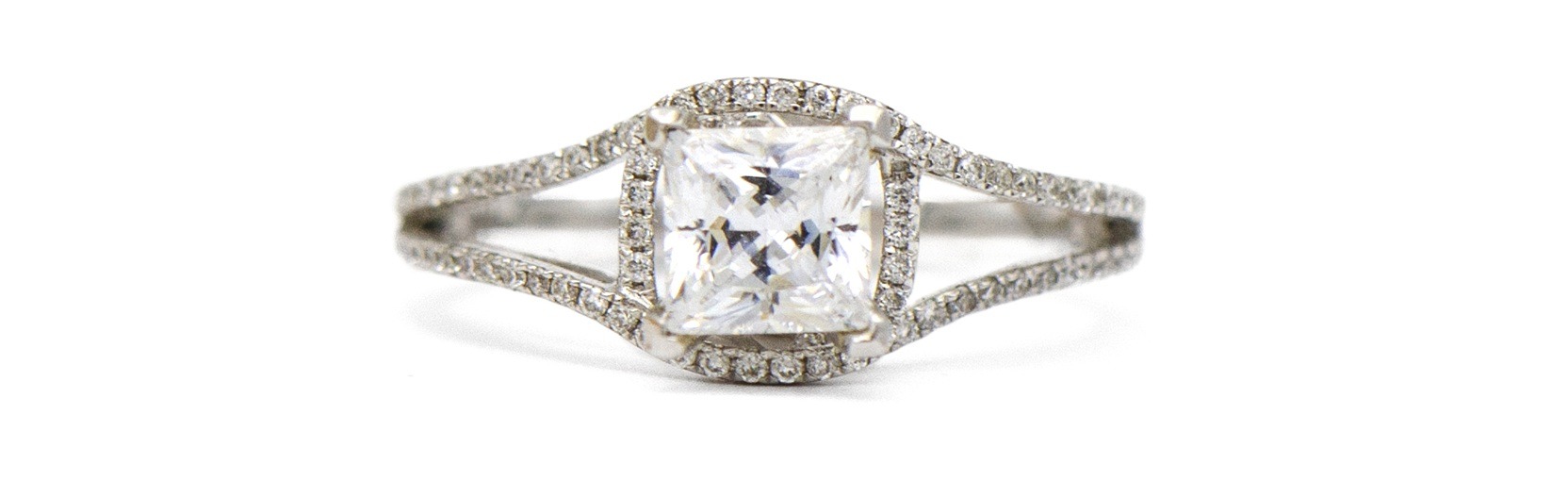
The cushion cut features rounded corners and gently curved sides, creating a soft, pillow-like appearance. This classic diamond cut blends vintage charm with modern brilliance and has remained popular for generations.
Pros
Cons
Best Settings
Halo, solitaire, vintage-inspired settings
Shop Cushion Cut Diamond Rings
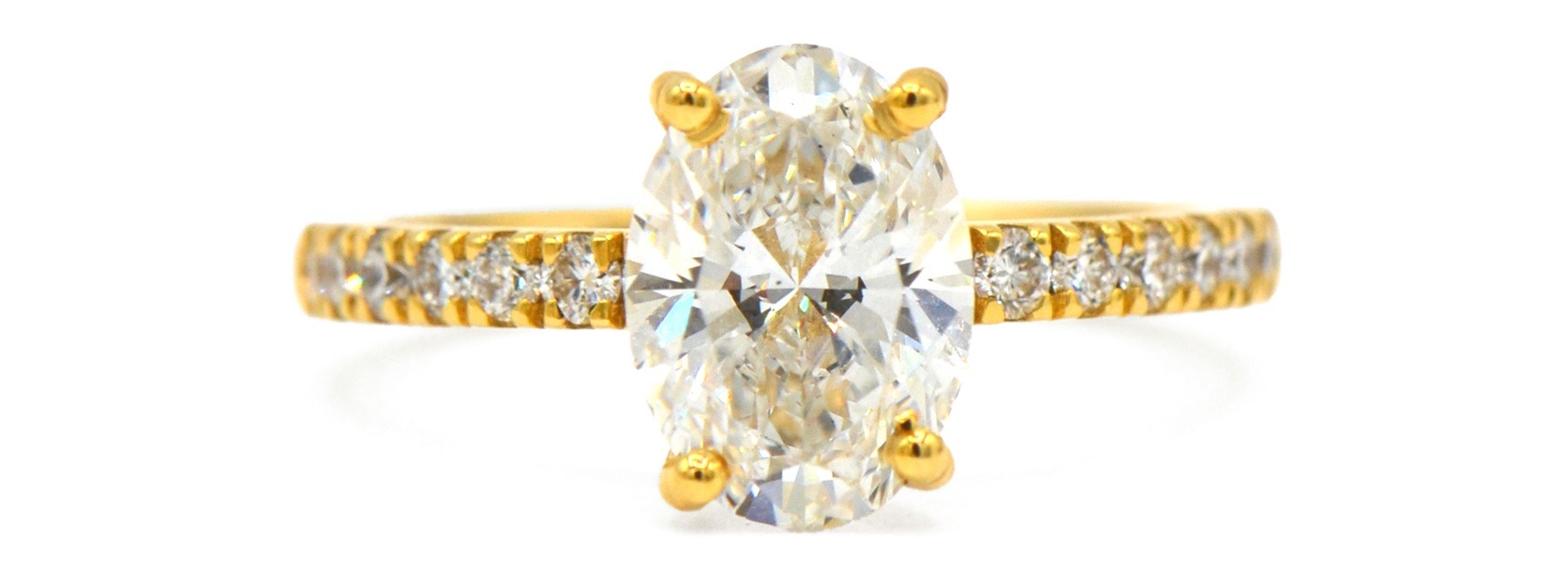
The oval cut offers brilliance similar to a round diamond while creating a more elongated silhouette. Its elegant proportions can make your fingers appear longer and give the illusion of a larger diamond than its carat weight would suggest.
Pros
Cons
Best Settings
Solitaire, halo, three-stone, east-west settings
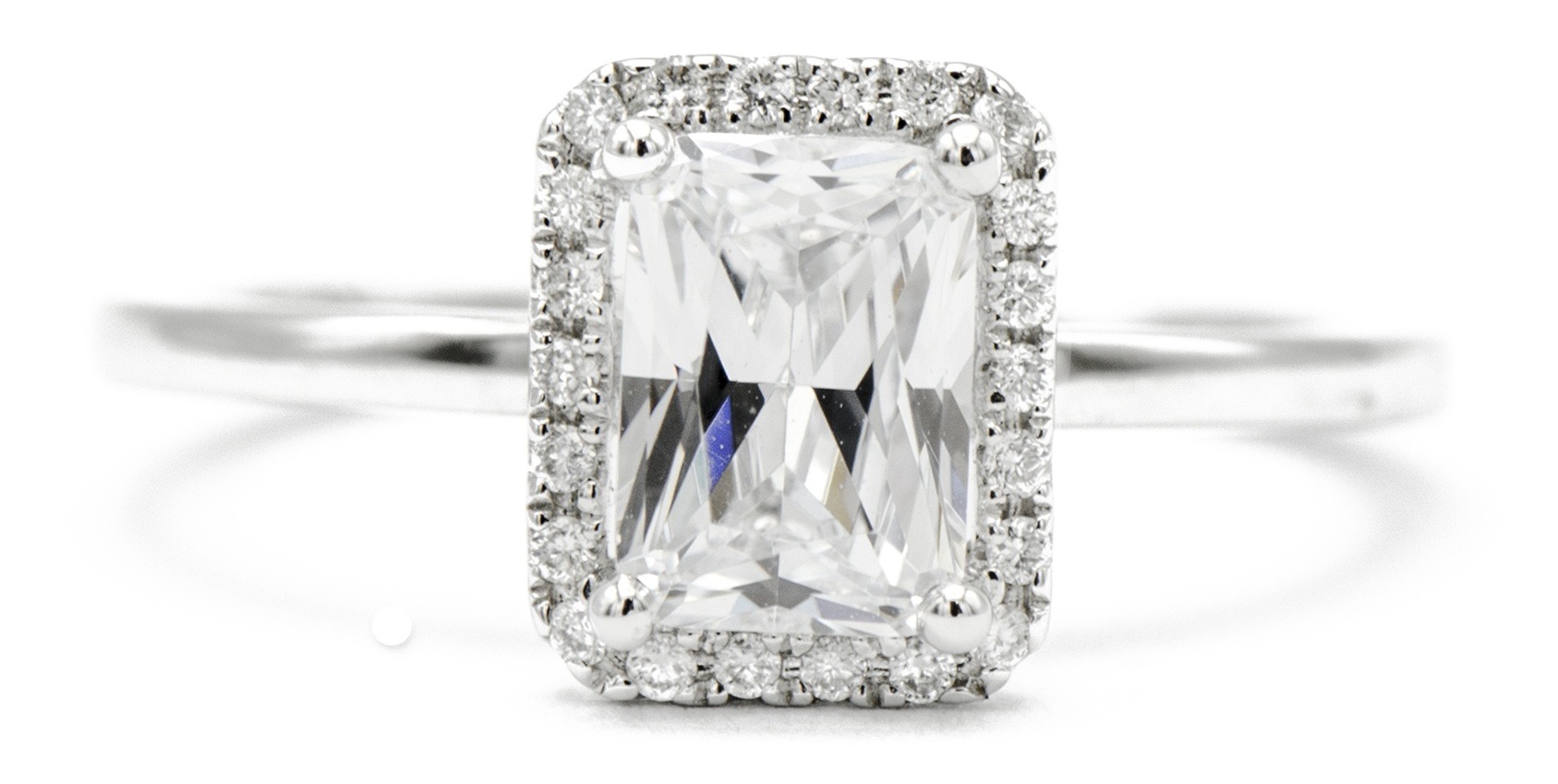
The emerald cut is a rectangular diamond with long, step-cut facets that create elegant flashes of light instead of intense sparkle. It features clean lines and a sophisticated appearance.
Pros
Cons
Best Settings
Solitaire, three-stone, cathedral settings, baguette side stones
Shop Emerald Cut Diamond Rings
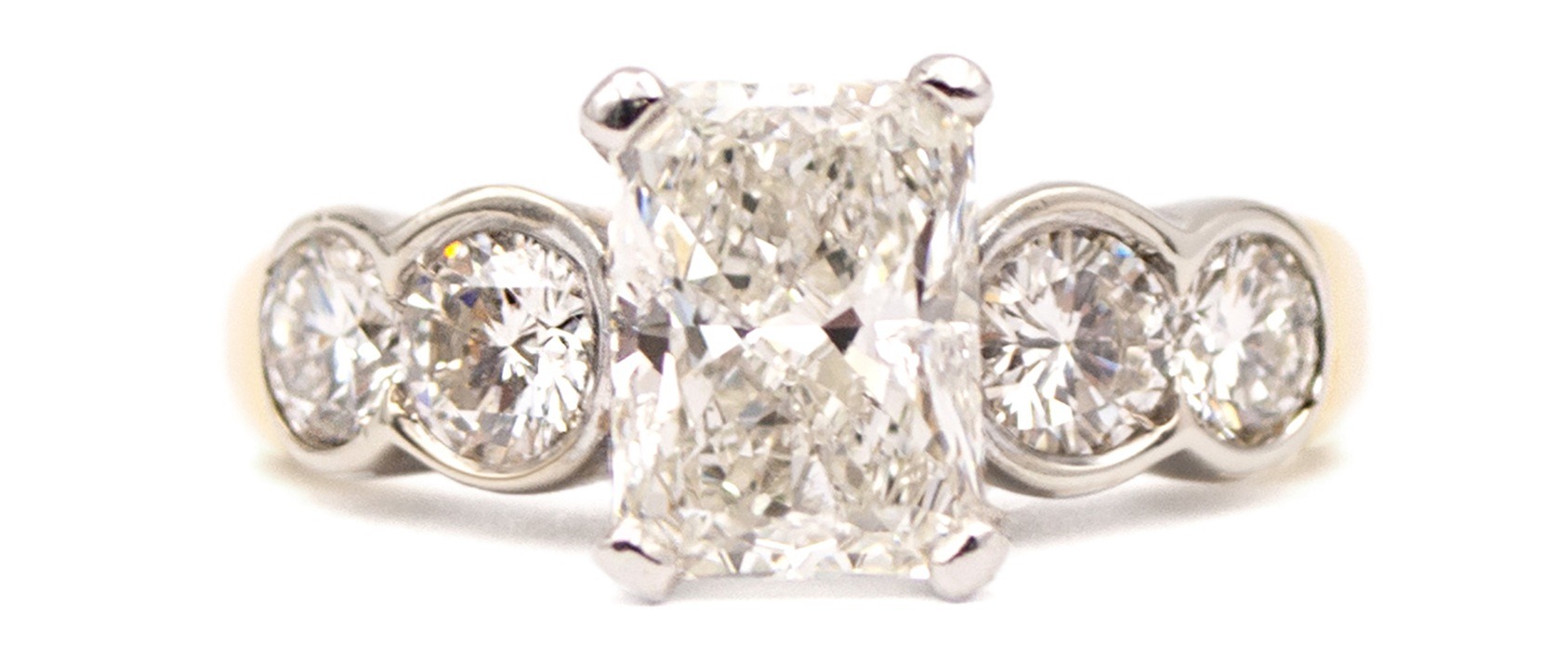
The radiant cut combines the sleek outline of an emerald cut with the brilliant faceting of a round diamond. It’s an excellent choice if you want bold sparkle in a square or rectangular shape.
Pros
Cons
Best Settings
Solitaire, halo, three-stone
Shop Radiant Cut Diamond Rings
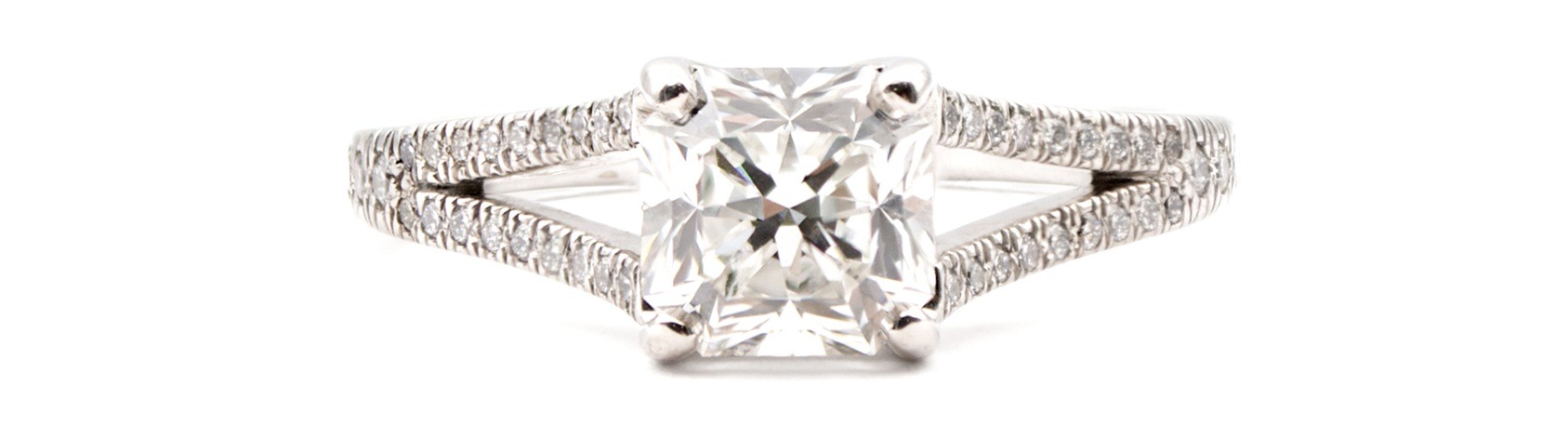
The Asscher cut is a square step-cut diamond with deeply trimmed corners and striking geometric symmetry. Originally developed during the Art Deco era, it’s prized for its vintage elegance.
Pros
Cons
Best Settings
Solitaire, vintage-inspired settings, cathedral settings, side baguettes
Shop Asscher Cut Diamond Rings
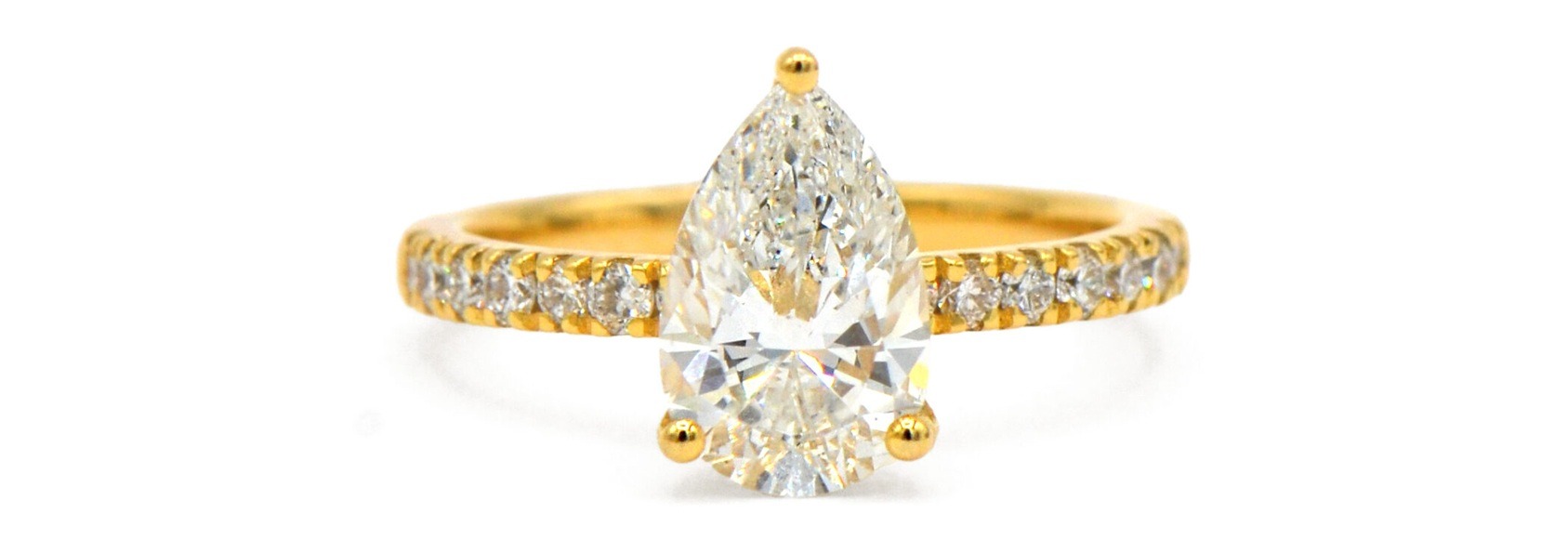
The pear cut, sometimes called a teardrop diamond, combines the brilliance of a round cut with an elongated pointed shape. Its graceful silhouette offers a distinctive alternative to classic diamond shapes.
Pros
Cons
Best Settings
Halo, solitaire, three-stone, V-prong settings
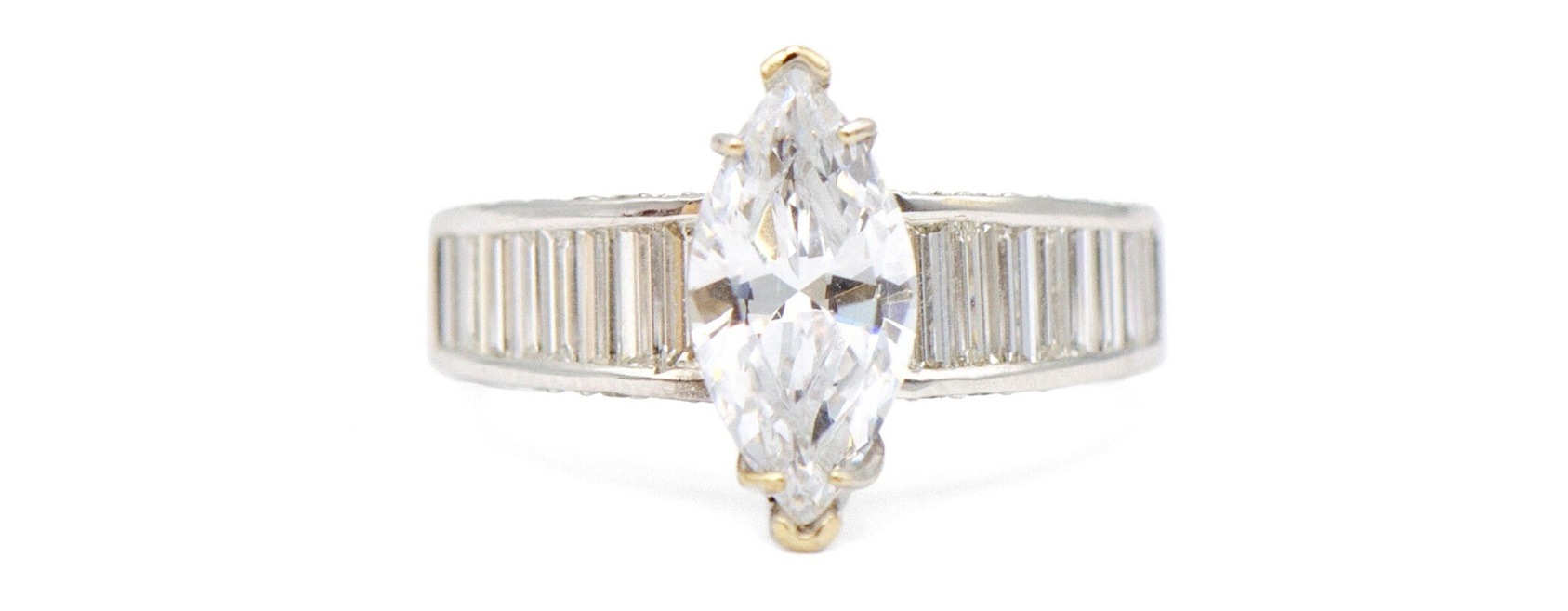
The marquise cut features pointed ends and an elongated shape that maximizes a diamond’s face-up size. Originally commissioned for French royalty, it’s still a unique and elegant choice today.
Pros
Cons
Best Settings
Solitaire, halo, east-west settings, V-prong settings
Shop Marquise Cut Diamond Rings
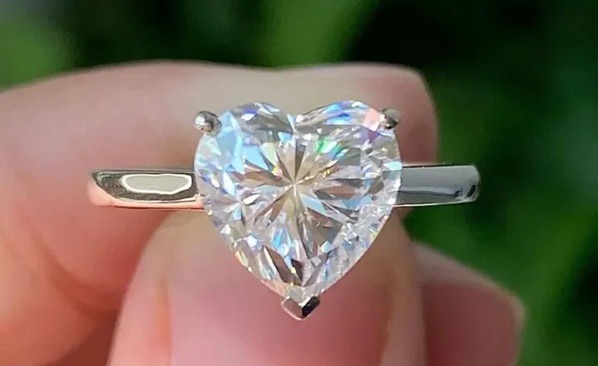
The heart cut is one of the most recognizable and symbolic diamond shapes, representing love and romance. Its symmetrical outline requires exceptional craftsmanship to achieve the perfect appearance.
Pros
Cons
Best Settings
Solitaire, halo, bezel, three-prong or five-prong settings
If sparkle is your top priority, some diamond cuts outshine others because of their facet patterns:
Facet arrangement plays a major role in light performance. Brilliant-cut diamonds feature numerous triangular and kite-shaped facets designed to maximize brilliance, while step-cut diamonds like emerald and Asscher create elegant flashes rather than intense sparkle.
Several factors influence the cost of different diamond cuts:
For many people, oval, cushion and radiant cuts provide an outstanding balance between beauty, size and price.
The best diamond cut depends on your personal style and priorities.
The Gemological Institute of America (GIA) grades the cut quality of round brilliant diamonds using five categories:
It’s important to note that the GIA only assigns an official cut grade to standard round brilliant diamonds. Fancy-shaped diamonds like oval, pear, emerald and cushion cuts are evaluated using other quality characteristics, including polish, symmetry and overall proportions.
While online photos can be helpful, there’s no substitute for seeing different diamond cuts in person and comparing how they reflect light, sparkle and complement your personal style.
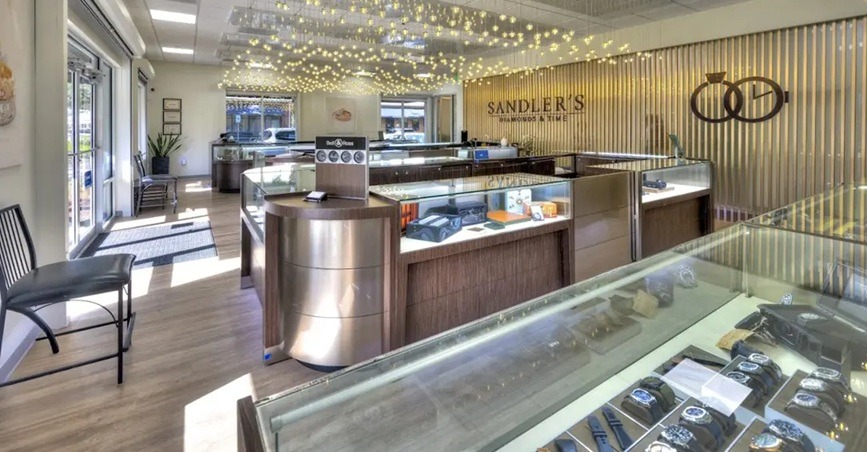
At Sandler’s Diamonds & Time in Mount Pleasant, SC, our experienced team is here to help you compare different diamond cuts, understand the 4 Cs and select a diamond that fits your style and budget. We offer a carefully curated selection of natural and lab-grown diamonds, along with custom engagement ring design services to help bring your vision to life.
Visit our showroom to explore a wide variety of diamond cuts and receive personalized guidance from our knowledgeable jewelry professionals.
The round brilliant cut is the most popular diamond cut thanks to its unmatched sparkle, timeless appearance and versatility in virtually every engagement ring setting.
Oval, marquise and pear diamonds appear larger than round diamonds of the same carat weight because of their elongated shapes and greater face-up surface area.
Round brilliant diamonds are usually the most expensive because they require more rough diamond material during cutting and are the most sought-after shape.
Princess, cushion, emerald and radiant cuts provide excellent value, while oval and pear cuts can offer a larger appearance without the premium price of a round brilliant diamond.
For most buyers, yes. A beautifully cut diamond often appears brighter, more lively and even larger than a heavier diamond with a poor cut. Prioritizing cut quality is one of the best ways to maximize your diamond’s overall beauty.