
Buying an engagement ring is one of the most meaningful purchases you’ll ever make. With so many options available, it can feel overwhelming to know where to start. Our engagement ring buying guide will walk you through the most important steps, from setting a budget to choosing the perfect diamond, so you can make a confident decision and find a ring your partner will love for a lifetime.
Looking for the perfect engagement ring? Visit Sandler’s Diamonds & Time to explore quality diamonds, start a custom design, and get expert guidance you can trust.
Before you start shopping, it’s important to determine how much you want to spend. Contrary to popular myths, there’s no rule that says you must spend a certain number of months of your salary on a ring. The right budget is simply one that fits comfortably within your financial situation.
When setting your budget, consider your income, savings, and any upcoming expenses like a wedding or home purchase. Some buyers choose to pay upfront, while others prefer financing options to spread payments over time.
Remember that a higher price doesn’t always mean a better ring. Factors like diamond cut quality, craftsmanship, and design often matter more than sheer size or cost. Our knowledgeable jewelers can help you maximize your budget by prioritizing the features that matter most to you.
Choosing a ring that matches your partner’s personal style is just as important as choosing the diamond itself. If you’re unsure what they like, pay attention to the jewelry they already wear. Do they prefer white metals like silver or platinum? Do they gravitate toward classic, minimalist designs or bold statement pieces?
Quick tips to learn your partner’s ring preferences:
Consider lifestyle as well. For someone with an active lifestyle or hands-on job, a lower-profile setting will help to protect the stone. The goal isn’t just to pick a beautiful ring: it’s to pick your partner’s ring.
Learning about the four Cs will help you make an informed decision when comparing diamonds. These four factors determine a diamond’s quality and value:
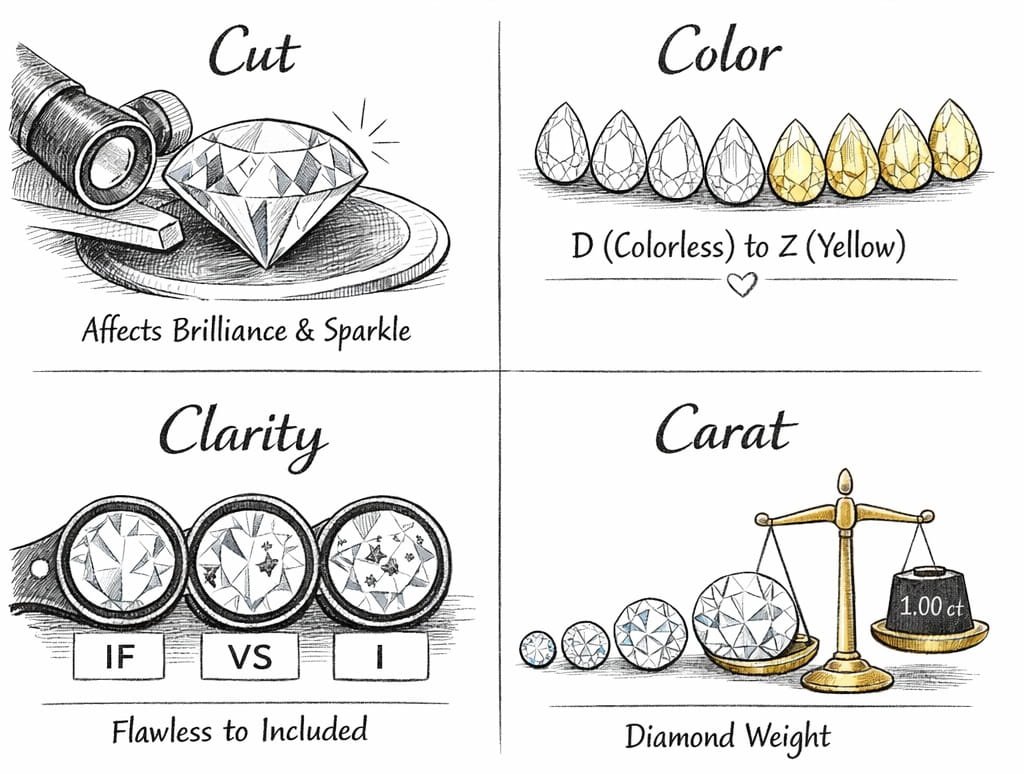
The center stone is the focal point of your engagement ring, so it’s important to choose one that aligns with your partner’s style preferences, your budget, and your values:
Natural diamonds are formed over billions of years beneath the earth’s surface and are valued for their rarity. Lab-grown diamonds are created using advanced technology that replicates natural growing conditions, creating stones with the same physical and chemical properties as natural diamonds.
Lab-grown diamonds cost much less than natural diamonds of comparable size and quality, making them a good option for buyers on a budget. Natural diamonds, however, are still popular for their tradition and long-term value.
Diamonds aren’t the only option for a gorgeous engagement ring. Many couples today are choosing alternative gemstones for their uniqueness, sentimental meaning, or affordability. Ask about the pros and cons of these stones to see if they fit your lifestyle.
Popular alternatives include:
When buying an engagement ring, many people assume that bigger is always better, but quality often matters more than size. A slightly smaller diamond with excellent cut quality can appear more brilliant than a larger, poorly cut stone.
You can also prioritize one of the four C’s over others. For example, choosing slightly lower clarity or color grades can allow you to afford a larger stone without sacrificing visual beauty. At Sandler’s Diamonds & Time, our experienced jewelers can help you find the right balance between size, sparkle, and price.
The setting determines how the diamond is displayed and protected. It also plays a major role in your engagement ring’s overall appearance.
Some of the most popular engagement ring settings include:
When choosing a setting, consider both aesthetics and practicality. Prong settings showcase brilliance but require more maintenance, while bezel settings provide excellent protection for active lifestyles. Trying on different styles can help you decide what looks best and feels most comfortable.

The metal you choose affects the ring’s appearance, durability, and maintenance needs. The most popular engagement ring metals include:
The right metal choice for your engagement ring depends on your partner’s style preferences and lifestyle needs.

Getting the right engagement ring size is important, but you’ll want to be discreet to avoid ruining the surprise! Here’s what our clients have said worked for them:
If the ring isn’t perfect, that’s okay. Ring resizing is often possible.
A diamond certificate provides an independent evaluation of your stone’s quality. This documentation confirms the characteristics of your diamond and helps protect your purchase.
The most respected grading organizations include:
These reports verify the four C’s and provide confidence that you’re getting what you pay for. Always ask to see certification documents before purchasing a diamond. Just keep in mind that because certified diamonds have verified grading, they often carry a price premium. Uncertified diamonds are a lower-cost alternative for buyers who prioritize value. Reputable jewelers are transparent about diamond grading and happy to explain the details.
Online retailers may offer convenience and competitive pricing, but local jewelers like Sandler’s Diamonds & Time in Mt. Pleasant, SC, provide advantages that can make a big difference. Working with a local jewelry store allows you to see diamonds in person, compare options directly, and receive personalized guidance.
Our experienced jewelers offer:
Stop by our showroom or give us a call to start your engagement ring buying process.
Knowing what mistakes to avoid can help you shop with confidence, stay within budget, and choose a ring you’ll feel proud to propose with:
Buying a beautiful engagement ring doesn’t mean you have to overspend. These choices can help you stay within budget while still getting a stunning ring:
If you’re ready to take the next step in your engagement ring buying process, visit Sandler’s Diamonds & Time to compare diamonds, explore settings, and get personalized guidance from our experienced jewelry professionals.
Ideally, you should begin shopping at least two to three months before your planned proposal date. This gives you time to compare options, order the ring, resize if necessary, and complete any custom work. Custom rings may take longer, so starting early helps avoid unnecessary pressure.
Yes, financing options are available that allow you to pay for your engagement ring over time. Financing can make higher-quality rings more accessible, but it’s important to understand interest rates and payment terms before committing. Always choose a payment plan that fits comfortably within your budget.
Both options have advantages. Online stores may offer lower prices, while in-store shopping allows you to see diamonds in person and receive expert guidance. Many buyers prefer working with a local jeweler for personalized service, education, and long-term support.
You can trade in your original diamond toward a larger or higher-quality stone in the future. This flexibility can make it easier to choose a ring now while leaving room for upgrades later.
Some couples shop together, while others propose with a temporary setting and choose the final ring afterward. The most important thing is choosing an approach that fits your relationship and ensures your partner gets a ring they truly love.